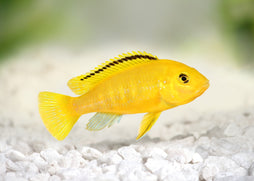
Description
Lamprologus Multifasciatus is a fascinating dwarf cichlid renowned for its small size, intricate vertical body markings and remarkable shell-dwelling behaviour. Native to Lake Tanganyika in East Africa, this highly active species lives among empty snail shells, which provide shelter, breeding sites and territorial boundaries. Its engaging social behaviour and unique habitat requirements make it an excellent choice for aquarists interested in creating a specialised African cichlid aquarium.
Features of Lamprologus Multifasciatus
-
Scientific name: Neolamprologus multifasciatus, commonly sold as Lamprologus multifasciatus.
-
Common name: Multies, Multis Shell-Dwelling Cichlid.
-
Origin: Lake Tanganyika, East Africa.
-
Appearance: Pale silver to beige body with numerous dark vertical stripes and blue highlights around the eyes.
-
Adult size: Approximately 3–4 cm, with males generally larger than females.
-
Lifespan: Approximately 5–8 years with proper care.
-
Temperament: Territorial, particularly around shells and breeding sites.
-
Diet: Carnivorous, feeding on small aquatic invertebrates and other protein-rich foods.
-
Care level: Intermediate, requiring hard, alkaline water and suitable shell habitats.
The best aquarium size for Lamprologus Multifasciatus
An aquarium of at least 60 litres is recommended for a small colony, with 80 litres or more providing additional space for territorial behaviour and colony growth. A long aquarium with a generous sand-covered floor is preferable to a tall tank. Keep sufficient empty shells available so individual fish can establish shelter and breeding territories.
Tank Mate Compatibility for Lamprologus Multifasciatus
Choose tank mates that share Lake Tanganyika's hard, alkaline water conditions and will not prey on these small cichlids. Potential companions in appropriately sized aquariums include:
-
Julidochromis Transcriptus
-
Calvus Cichlid
-
Brichardi Cichlid
-
Shell-Dwelling Ocellatus Cichlid
-
Synodontis Petricola Catfish
Compatibility depends on aquarium size, territorial behaviour and the specific species selected. Avoid overcrowding and monitor interactions closely, especially during breeding.
Diet for Lamprologus Multifasciatus
Lamprologus Multifasciatus benefits from a varied, protein-rich diet. Offer high-quality small cichlid pellets, finely sized granules and supplementary foods such as brine shrimp, daphnia and mysis shrimp. Feed small portions once or twice daily, ensuring food is small enough for easy consumption. Remove uneaten food to maintain excellent water quality.
Aquarium Setup for Lamprologus Multifasciatus
Aquarium Filtration
Use efficient biological filtration with good oxygenation and gentle to moderate water movement. Regular partial water changes help maintain stable water parameters and control waste.
Aquarium Plants
Plants are optional in a shell-dweller aquarium. Hardy species such as Anubias and Java Fern can be attached to rocks, but leave most of the substrate open for shell placement and digging.
Aquarium Lighting
Moderate lighting highlights the fish's striped markings and supports a natural day-night cycle. Maintain a consistent photoperiod of approximately 8–10 hours daily.
Aquarium Heating
Maintain a stable temperature of 24°C–27°C, suitable for tropical Lake Tanganyika conditions. Use a reliable adjustable heater and thermometer.
Aquarium Substrate
Fine sand is essential for natural digging behaviour and allows the fish to reposition shells. Avoid sharp gravel that could injure the fish.
Aquarium Decorations
Provide numerous empty snail shells, such as suitable escargot shells, distributed across the sandy substrate. Arrange a few stable rocks around the aquarium perimeter while preserving open sand for shell territories and colony development.