Description
Fossochromis Rostratus Malawi Sand Diver
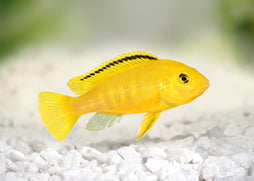
Fossochromis Rostratus, commonly known as the Malawi Sand Diver, is an impressive Lake Malawi cichlid valued for its elongated body, striking blue and gold colouration and distinctive sand-diving behaviour. This active predator naturally inhabits sandy areas where it searches for small aquatic prey. Its substantial adult size and energetic nature make it best suited to large, mature aquariums designed around open swimming space and sandy substrate.
Features of Fossochromis Rostratus Malawi Sand Diver
-
Native to Lake Malawi, Africa
-
Known for its distinctive sand-diving and hunting behaviour
-
Can reach approximately 30–35 cm in length
-
Males develop stronger blue and gold colouration as they mature
-
Active, powerful swimmer requiring substantial open space
-
Best kept with appropriately sized Lake Malawi cichlids
-
Requires clean, well-oxygenated, alkaline water
The best aquarium size for Fossochromis Rostratus Malawi Sand Diver
A minimum aquarium size of 600 litres is recommended for adult Fossochromis Rostratus. Larger aquariums are preferable for groups or community setups. A long aquarium with a generous open sandy area is particularly important, allowing these active cichlids to display their natural swimming and feeding behaviours.
Tank Mate Compatibility for Fossochromis Rostratus Malawi Sand Diver
Choose robust Lake Malawi species that are similar in size and able to tolerate comparable water conditions. Suitable tank mates include:
-
Blue Dolphin Cichlid
-
Red Empress Cichlid
-
Livingstoni Cichlid
-
Venustus Cichlid
-
Peacock Cichlid
Avoid very small fish and highly aggressive species that may be intimidated or harassed.
Diet for Fossochromis Rostratus Malawi Sand Diver
Fossochromis Rostratus is a carnivorous predator that naturally feeds on small fish and invertebrates found around sandy habitats. Offer high-quality carnivorous cichlid pellets supplemented with suitable frozen foods such as prawns, mysis shrimp and other aquatic foods. Feed appropriately sized portions and avoid excessive feeding.
Aquarium Setup Fossochromis Rostratus Malawi Sand Diver
Aquarium Filtration
Use powerful mechanical and biological filtration to manage waste and maintain excellent water quality. Strong oxygenation and regular partial water changes are essential.
Aquarium Plants
Plants are optional and generally not a priority. The species benefits more from open sandy areas and carefully positioned hardscape.
Aquarium Lighting
Moderate lighting is suitable, with some shaded areas around rocks providing security and visual variety.
Aquarium Heating
Maintain a stable temperature of approximately 24–28°C. Avoid sudden fluctuations and ensure adequate oxygenation at warmer temperatures.
Aquarium Substrate
Fine aquarium sand is essential for replicating the natural environment and allowing Fossochromis Rostratus to perform its characteristic sand-diving behaviour. Avoid coarse or sharp substrates.
Aquarium Decorations
Use large, stable rocks around the aquarium perimeter while leaving a substantial central area open for swimming and feeding. Secure heavy decorations firmly to prevent them being shifted during digging activity.