

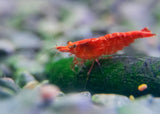

Pure Red Line Shrimp is a selectively bred freshwater dwarf shrimp prized for its vibrant, solid red body and elegant, slender form. Belonging to the Caridina genus, this variety is moderately sensitive to water quality, making it suitable for experienced aquarists or dedicated shrimp setups. Its peaceful nature and constant grazing make it an attractive addition to heavily planted aquariums.
Features of Pure Red Line Shrimp
-
Striking solid red coloration with clear, defined lines along the body
-
Compact size, typically 2–3 cm when fully grown
-
Peaceful and non-aggressive, ideal for shrimp-only or community tanks with compatible species
-
Active grazers, feeding on biofilm and microorganisms
-
Sensitive to water parameter fluctuations
-
Lifespan of 1.5–2 years under optimal care
The best aquarium size for Pure Red Line Shrimp
A minimum tank volume of 20 litres is recommended for a small colony, though 40 litres or more provides greater stability and supports population growth. Wider tanks are beneficial, offering additional grazing surfaces and hiding spots.
Tank Mate Compatibility for Pure Red Line Shrimp
Compatible tank mates must be peaceful and non-predatory:
-
Otocinclus Catfish
-
Ember Tetra
-
Pygmy Corydoras
-
Chili Rasbora
-
Nerite Snail
Diet for Pure Red Line Shrimp
Pure Red Line Shrimp are omnivorous scavengers that feed on biofilm, algae, and detritus. Their diet should be supplemented with high-quality shrimp pellets, algae wafers, and occasional blanched vegetables such as zucchini or spinach. Mineral supplements aid molting and exoskeleton development. Feeding should be controlled to maintain water quality and prevent overgrowth of algae.
Aquarium Setup Pure Red Line Shrimp
Aquarium Filtration
Gentle filtration is essential to protect the shrimp and maintain clean, stable water. Sponge filters or low-flow external filters are ideal for providing safe filtration while supporting beneficial bacteria.
Aquarium Plants
Dense planting with Java Moss, Christmas Moss, or fine-leaved plants provides grazing surfaces, shelter, and protection for juveniles.
Aquarium Lighting
Moderate lighting supports plant growth and encourages biofilm development, a natural food source for shrimp.
Aquarium Heating
Maintain stable temperatures between 20–24 °C. Consistency is crucial, as fluctuations can stress this sensitive species.
Aquarium Substrate
Active or inert substrates suitable for Caridina shrimp are recommended, supporting stable water parameters and natural foraging behavior.
Aquarium Decorations
Incorporate driftwood, leaf litter, and small rocks to create hiding spaces, promote biofilm growth, and mimic a natural environment conducive to breeding and healthy colony development.


